

 @startcdl
 +1 (224) 520-3169


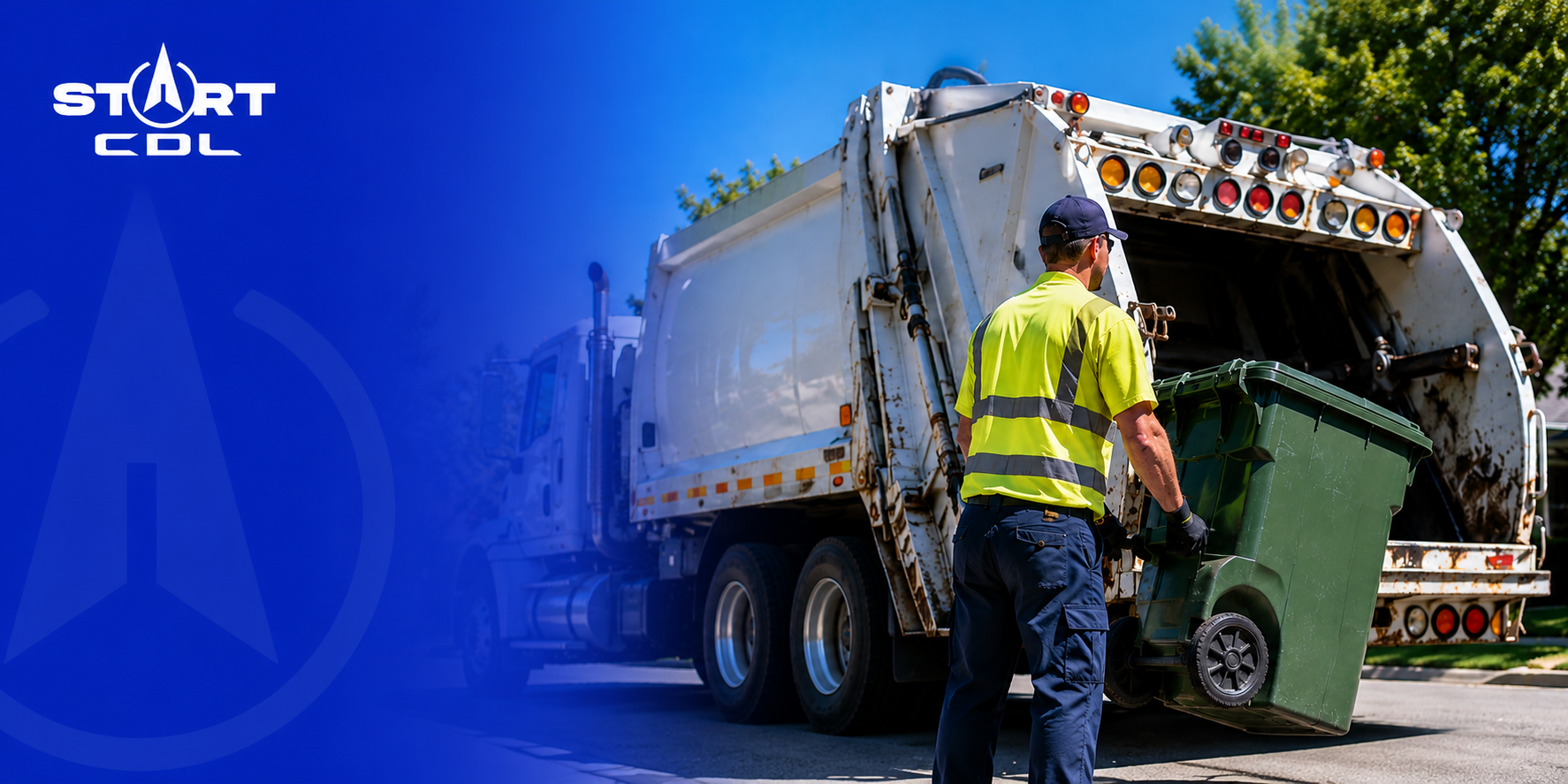
Do You Need a CDL to Drive a Garbage Truck?
If you’re considering a career in waste management, one of the first questions you may have is: do you need a CDL to drive a garbage truck? The short answer is yes—most garbage truck drivers are required to hold a Commercial Driver’s License (CDL). However, the specific license class and endorsements you’ll need can vary depending on the type of truck, the vehicle’s weight, and local regulations.
In this guide, we’ll explain CDL requirements for garbage truck drivers, the different license classes, and how to start a career in the waste management industry.
Do You Need a CDL to Drive a Garbage Truck?
In most cases, yes, you need a CDL to drive a garbage truck. Garbage trucks are typically classified as commercial motor vehicles because they exceed the weight limits established by federal and state transportation authorities.
Most garbage trucks have a Gross Vehicle Weight Rating (GVWR) greater than 26,001 pounds, which means drivers must obtain a Commercial Driver’s License before operating them legally.
Because waste collection vehicles are large, heavy, and often operate in residential areas with frequent stops, employers generally require drivers to have proper training and licensing to ensure safety on the road.
Do You Need a CDL for a Garbage Truck?
Another common question is: do you need a CDL for a garbage truck if you’re only driving locally?
The answer is usually yes. Even though garbage truck routes are often limited to city streets and local neighborhoods, CDL requirements are based primarily on vehicle weight rather than distance traveled.
Whether you’re collecting residential waste, commercial dumpsters, or recycling materials, you’ll typically need a CDL if the truck exceeds federal weight thresholds.
Some smaller sanitation vehicles may not require a CDL, but these are the exception rather than the rule.
What Type of CDL Is Required?
The specific CDL required depends on the type of garbage truck you’re driving.
Class B CDL
A Class B CDL is the most common license for garbage truck drivers.
This license allows drivers to operate:
- Straight trucks
- Front-load garbage trucks
- Rear-load garbage trucks
- Side-load collection vehicles
- Roll-off trucks that meet Class B requirements
Most municipal and private waste collection companies hire drivers with a Class B CDL.
Class A CDL
A Class A CDL may be required if you’re operating a combination vehicle, such as:
- Garbage trucks pulling heavy trailers
- Transfer trailers
- Large waste-hauling combinations
A Class A CDL provides more flexibility and may open additional job opportunities within the transportation and waste management industries.
Why Is a CDL Required?
Garbage trucks are significantly different from passenger vehicles.
Drivers must learn how to:
- Safely maneuver large vehicles in tight spaces
- Handle blind spots
- Operate hydraulic equipment
- Conduct pre-trip inspections
- Follow federal and state safety regulations
- Manage heavy loads and shifting weight
CDL training helps prepare drivers for these responsibilities while reducing the risk of accidents and injuries.
Additional Requirements for Garbage Truck Drivers
Beyond obtaining a CDL, employers may require additional qualifications.
Clean Driving Record
Most companies prefer candidates with a safe driving history and minimal traffic violations.
Medical Certification
Commercial drivers are generally required to pass a Department of Transportation (DOT) physical examination and maintain a valid medical certificate.
Drug and Alcohol Testing
Federal regulations require CDL holders to participate in drug and alcohol testing programs.
Background Checks
Many waste management companies conduct background screenings before hiring drivers.
How to Get a CDL for Garbage Truck Driving
If you’re interested in becoming a garbage truck driver, the process typically involves several steps.
1. Meet Eligibility Requirements
Requirements vary by state, but most applicants must:
- Be at least 18 years old for intrastate driving
- Be at least 21 years old for interstate driving
- Hold a valid driver’s license
- Meet medical qualifications
2. Obtain a Commercial Learner’s Permit (CLP)
Before earning a CDL, you’ll need to pass written knowledge exams and obtain a Commercial Learner’s Permit.
3. Complete CDL Training
Many drivers attend a CDL training school or employer-sponsored training program to gain hands-on experience.
4. Pass the CDL Skills Test
The CDL exam typically includes:
- Vehicle inspection
- Basic vehicle control
- Road driving test
Once you pass, you’ll receive your Commercial Driver’s License.

Max is an editor, translator, and driver from Ukraine, with over 15 years of driving experience.
Regularly collaborating with our experts, he prepares materials for drivers
that can be useful for improving qualifications.
Related Articles
The Class B type-license of commercial driver used for heavier single-vehicle applications across t...
It's crucial to understand the importance of obtaining a specific endorsement if you plan to transp...

The sphere of commercial driving is a paramount element of our contemporary economy, guaranteeing t...
10 years of experience
and
10000+ graduated
students with CDL
Feel free to ask
us any questions about
getting a CDL in the USA
